
When Leaders Become the Bottleneck
A story about interruptions, planning, and how ignoring process can drain a team’s energy and focus.
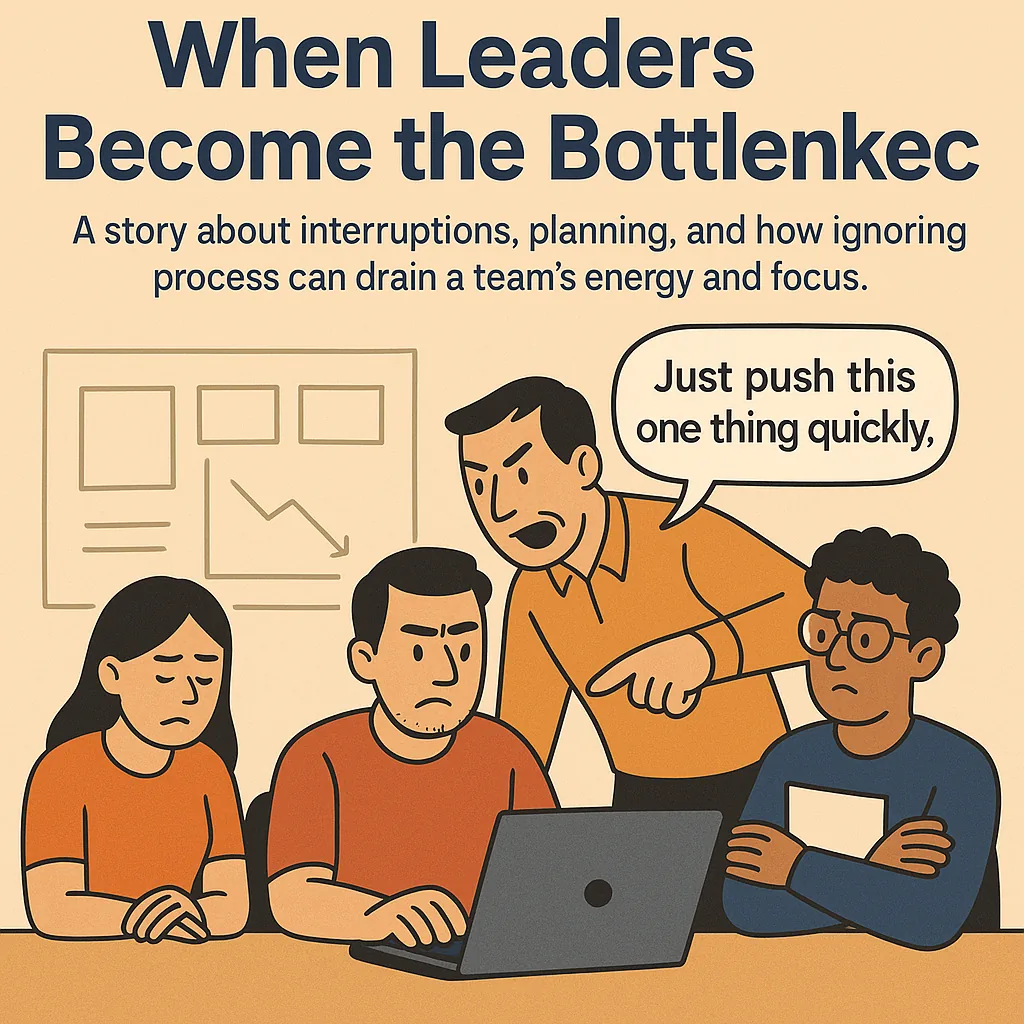
Situation
We were in the middle of an important sprint, one of those make-or-break cycles where the entire tech team was deep in flow. Every task was mapped, dependencies were clear, and everyone knew their part. Then it started happening: my manager would suddenly appear, message, or call. Not once, but repeatedly.
“Haji, what happened to that feature?” “This task should take two minutes.” “Just push this one thing quickly.”
Each time, the context-switching broke momentum. Each “quick fix” turned into half a day of rework, testing, or debugging. And each interruption delayed the actual roadmap work, the same one we were being held accountable for.
Task
As the Product Marketing Manager, my role was to keep alignment: ensure the roadmap stayed on track while managing expectations upward. I needed to protect the team’s focus, communicate priorities clearly, and make sure leadership understood the cost of every “quick request.”
Action
I started documenting every unplanned task that came from leadership. For each request, I logged when it arrived, who made it, and what it impacted. Within two weeks, the list was long: over 12 unplanned requests, each one disrupting multiple people.
Then, instead of confronting emotionally, I presented data: how many sprint items were delayed, how much tech debt was created, and how the team’s cycle time had doubled. I also proposed a simple solution, a “Focus Zone”: a protected block during the day when no one interrupts engineers unless it’s critical.
Result
Once the data was visible, the conversation shifted. The same manager who once said, “It’s a two-minute job,” realized the real cost: context-switching, burnout, and accumulated tech debt. Within a month, we had better boundaries, fewer interruptions, and higher-quality output. But most importantly, the team felt respected again.
“A leader’s job isn’t to move faster than the team. It’s to clear the path so the team can move without interruption.”
The Lesson
Great leadership isn’t about constant motion. It’s about discipline. Respect for planning and process is respect for people. When leaders interrupt flow, they don’t accelerate progress. They sabotage it.
Lesson in one line: Protecting focus isn’t optional. It’s the foundation of quality, trust, and long-term speed.

No spam · Typical response time: under 24 hours · Confidential and direct